Speed Wins Go-To-Market
How mid-market teams ship faster, learn faster, and stop bleeding momentum in queues

MOST MID-MARKET MARKETING TEAMS DON’T HAVE AN IDEA PROBLEM. THEY HAVE A DEPLOYMENT PROBLEM.
You can have a sharp offer. A strong angle. Real buyer interest. Then the website gets involved.
It becomes a ticket. Then a queue. Then a meeting about the ticket. Then the launch date quietly slides into the next sprint like it lives there.
That’s not a creativity issue. That’s drag. And in go-to-market, drag is expensive.
WHAT WE ACTUALLY MEAN BY SPEED
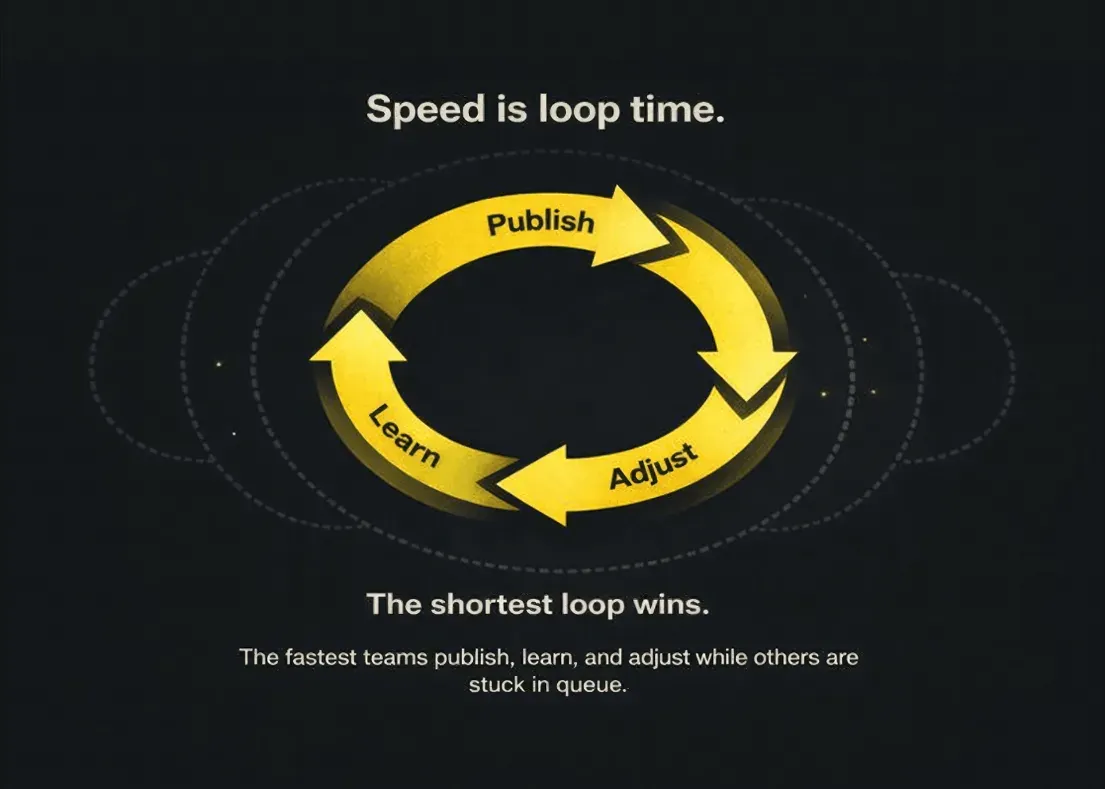
Speed is not rushing. Speed is loop time.
If your loop takes weeks, you’re competing against teams whose loop takes days. Speed compounds.
The fastest teams don’t just launch more. They learn more, sharpen faster, and improve while everyone else waits for approvals.
WHY THE WEBSITE IS THE FIRST SPEED LEVER

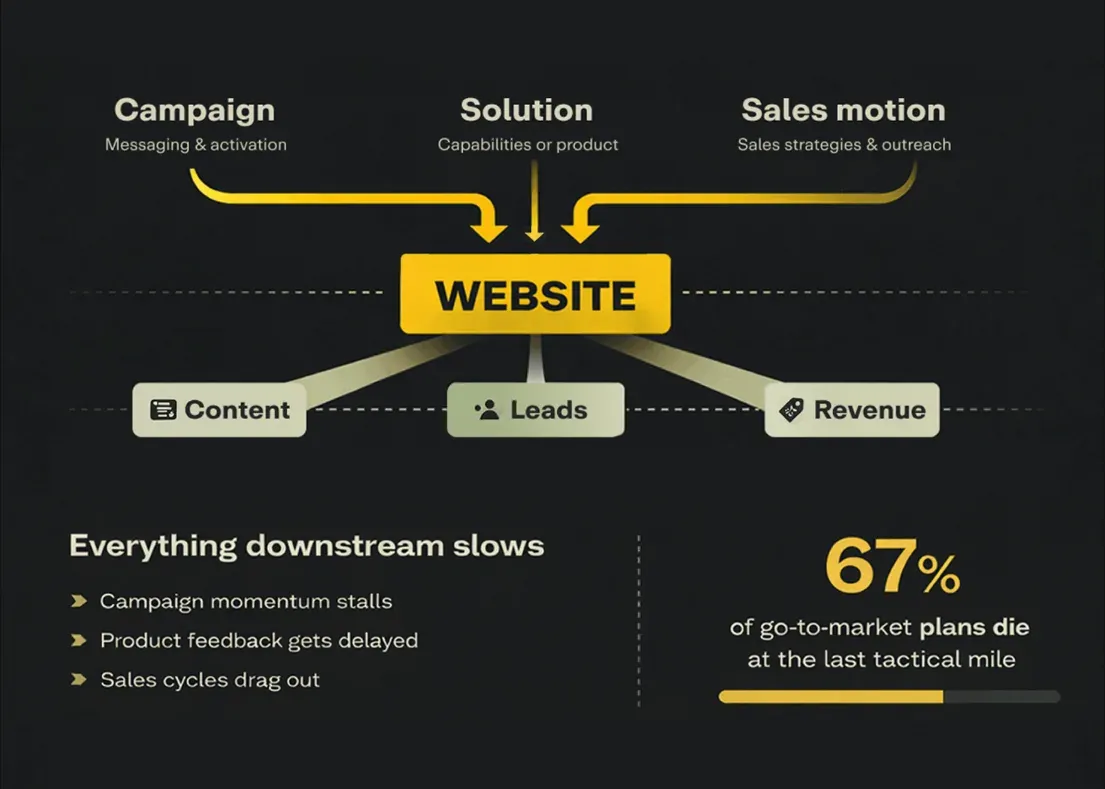
In the mid-market, your website does a lot of heavy lifting:
- It defines your positioning
- It’s your campaign landing zone
- It’s your credibility check
- It’s your conversion engine
So when the site moves slowly, everything moves slowly. Not just marketing. Sales too. Because buyers experience your brand through what they see, and how current it feels. Here’s the uncomfortable truth: Most teams can write faster than they can ship. That gap is where momentum goes to die.
FROM THE TEAM
Speed isn’t a personality trait. It’s whether your team can turn insight into a live customer experience before the moment passes.”
The shift we made: treat the site like a living growth asset
When we rebuilt our product site, we had one goal: move like a product team. Not to publish more pages. To learn faster. We chose Framer because it compressed the distance between idea, design, and live experience. This isn’t a Framer fan-club post. It’s a speed post. Framer just happens to be the clearest example of what happens when marketing can ship without friction.
What Framer actually changed (in plain English):
Marketing stopped waiting to ship
When updates are easy, shipping becomes normal…not a special event. That changes behavior. The site stays current. The team stays confident. And the market never waits.
We built modular systems, not one-off masterpieces
Speed gets dangerous when every page is custom. You move fast and quietly break structure, consistency, and SEO. Speed became a process, not a gamble. So we built:
- Reusable sections
- Repeatable layouts
- Clear rules
Iteration became a weekly habit
A page isn’t done when it’s published. It’s done when it performs. Once shipping friction disappeared, we started reviewing pages like a product team:
- What did people click?
- Where did they hesitate?
- Which message landed?
- What confused them?
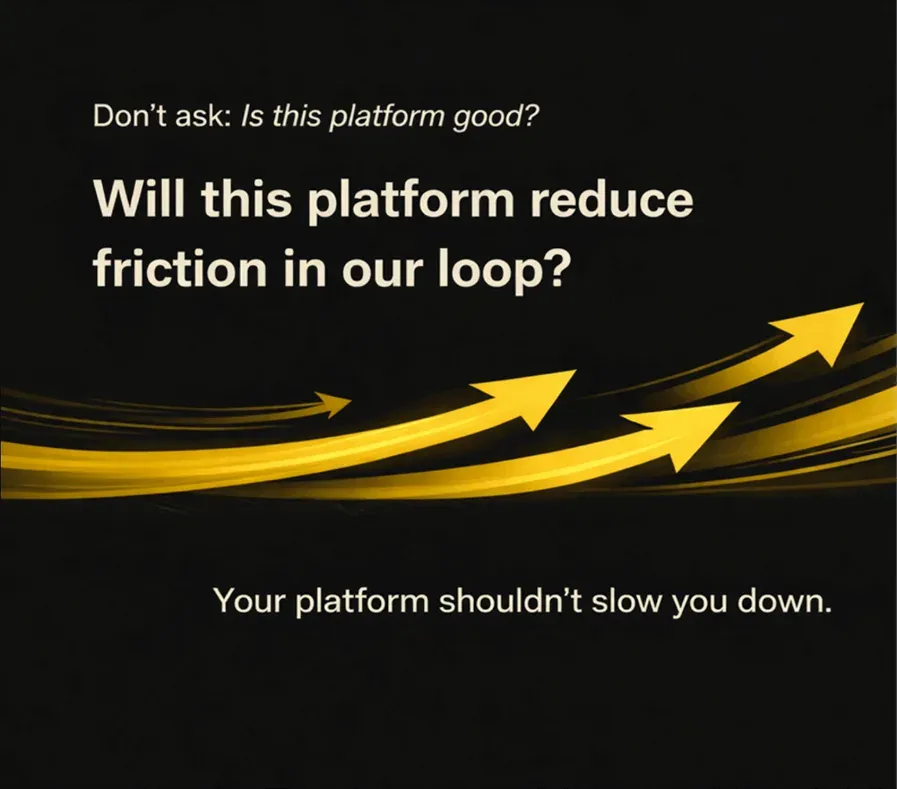
The only platform question that actually matters
Most growth teams don’t lose because strategy is wrong. They lose because execution is slow and feedback arrives too late.
If you can’t update homepage messaging in a day, your positioning is fragile. If you can’t launch a landing page in a day, your campaigns are fragile. Your platform should remove drag, not introduce it.
SPEED NEEDS SEATBELTS
Speed without guardrails becomes chaos with nice typography. These are non-negotiable.
URL discipline
No URL change without a redirect. Ever.
Performance is a growth metric
- Motion with intent
- Compressed media
- Mobile first
- Treat page speed like conversion rate, not a dev hobby
One page, one job
If a page tries to answer five intents, it ranks for none and converts worse.
Measurement by default
Before you ship, make sure you can learn.
- CTA clicks
- Form submits
- Scroll depth
- Navigation paths
If you can’t measure it, you can’t improve it.
Write for scanners and answer engines
SEO still matters. So does AI-driven discovery. What wins now:
- Define terms early
- Use real question-based headings
- Answer directly, then expand
- Include short FAQs
- Write quotable blocks
Clarity compounds.
A 15-MINUTE SPEED AUDIT. ASK YOURSELF:
- How long does it take to publish a new landing page?
- How long to change a homepage headline?
- How many people approve a basic edit?
- How often do top pages get improved?
- Do you have a redirect process today?
- Templates, or one-off habits?
If those answers feel slow, you’ve found your leverage.
Speed isn’t about rushing. It’s about reducing friction between a great idea and a live customer experience.
CLOSING
Go-to-market speed isn’t a vibe. It’s a competitive advantage. When you remove friction from the website workflow, you don’t just ship faster. You learn faster. You adapt faster. You stop losing momentum to process. That’s what we learned building our product site in Framer.
Written by
The Mabbly team
Mabbly builds and runs one system for strategy, marketing and sales for firms that grow on relationships.